Imagine launching a marketing campaign full of energy and ideas. You pour time and money into it. But without metrics, you have no clue if it’s working. Marketing without measurement feels like driving in the dark. You might hit a roadblock or waste fuel on the wrong path. Real success comes from facts, not hunches. Marketing metrics act as the clear language of performance. They show what works and what doesn’t.
Think about return on investment, or ROI. It measures if your efforts pay off. Accountability grows when you track results. No more vague promises to bosses. This article shows how metrics turn marketing into a profit engine. You will learn to use data for smarter choices. Let’s dive in.
1: Defining Marketing Metrics: Moving Beyond Vanity
Marketing metrics give you a full picture of your efforts. They cover the whole customer path, from first notice to loyal buys. Without them, you risk blind spots in your plan.
Essential Categories of Marketing Metrics
Metrics fall into key groups that track the customer journey. Start with awareness metrics like reach and impressions. These show how many eyes see your message. Next come engagement metrics such as clicks, shares, and time on page. They reveal if people interact with your content.
Conversion metrics focus on leads and sales. They prove if your work leads to action. Retention metrics, like customer lifetime value or churn rate, keep track of long-term loyalty. A strong strategy looks at all these buckets. It ensures balance across the funnel, not just early stages. For example, high awareness means little without solid conversions.
The Difference Between Vanity Metrics and Actionable Metrics
Vanity metrics sound impressive but lack real power. Total likes or followers might boost your ego. Yet they often don’t tie to sales or growth. Actionable metrics, on the other hand, link straight to business wins. Cost per acquisition, or CPA, tells you the true expense of each customer.
Social platforms love to highlight vanity numbers. They keep users hooked on surface stats. Smart marketers dig past that. They seek data that guides real changes. Focus on actionable ones to build strategies that last.
Key Performance Indicators (KPIs) vs. Standard Metrics
Standard metrics give broad views of activity. KPIs zero in on your top goals. If you aim to grow market share, your KPI could be the rate of marketing qualified leads turning into sales qualified ones. These picks align with big picture aims.
Pick just 3 to 5 core KPIs before any campaign starts. This keeps focus sharp. Track them often to stay on course. It turns vague plans into targeted wins.
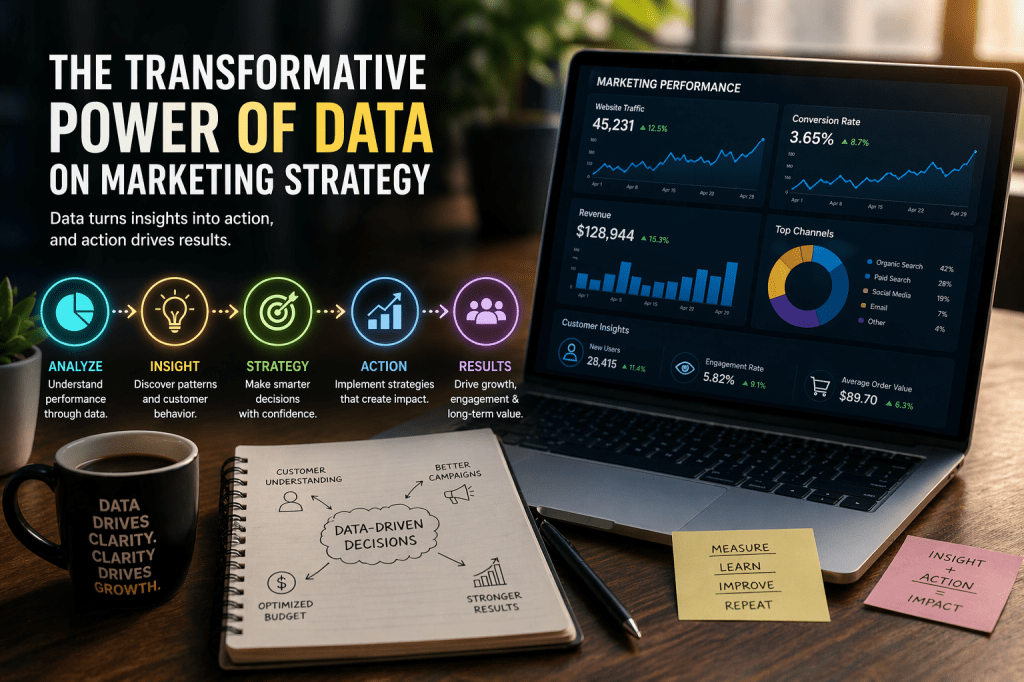
2: The Transformative Power of Data on Marketing Strategy
Data from metrics changes how you plan and act. It shifts you from guesswork to smart moves. Let’s see how this power plays out in key areas.
Optimizing Budget Allocation Through Performance Tracking
Tracking performance helps you spend money wisely. ROI shines here as the main guide. Marketing attribution tools show which channels drive results. They reveal paths from ad view to purchase.
Take a real case. A team might cut funds from weak banner ads. CPA data proves they cost too much per customer. Then, they boost targeted search ads that perform well. This switch often doubles efficiency. Data rules the budget now, not habit.
Personalization and Customer Journey Mapping
Behavioral metrics paint a clear map of customer paths. See time spent on pages or content paths. This lets you segment users by habits. Tailor messages to fit their needs.
A/B testing adds proof. Test two ad versions and check conversion lifts. The winner gets refined. Keep this cycle going for better personalization. It builds trust and boosts response rates.
Forecasting and Predictive Analysis
Past metrics predict future trends. Spot seasonal traffic bumps or lead patterns from past spends. Use this to set realistic goals. Data models project outcomes from new investments.
For instance, if email campaigns yield steady leads in spring, plan more for April 2026. This avoids surprises. It turns marketing into a forward-thinking force.
3:Core Metrics That Directly Impact Revenue
Revenue ties to metrics that span the funnel. Top to bottom, each stage matters. Let’s break down the ones that hit your wallet hardest.
Measuring Top-Funnel Success: Traffic and Engagement
Top-funnel metrics gauge initial pull. Organic traffic growth shows search engine wins. Click-through rate, or CTR, measures ad appeal. Bounce rate flags if visitors leave fast.
Quality beats quantity every time. Tons of traffic means nothing if it doesn’t stick. Use heatmaps and session recordings to spot issues. They reveal where users drop off. Fix those spots for stronger starts.
Mid-Funnel Velocity: Lead Quality and Conversion Rates
Mid-funnel looks at lead flow speed. Track marketing qualified leads, or MQLs, to sales qualified leads, or SQLs. Conversion rates here prove marketing’s worth to sales teams. High rates mean quality leads.
Sales and marketing must align on these. Set service level agreements based on benchmarks. Aim for 20-30% MQL to SQL shifts in many industries. This speeds revenue and cuts waste.
Bottom-Line Impact: Customer Lifetime Value (CLV) and CAC Ratio
Bottom metrics drive true profits. Customer lifetime value, or CLV, estimates total worth from one client. Customer acquisition cost, or CAC, counts spend to gain them. The ratio should hit 3:1 or better for health.
If CLV dwarfs CAC, growth sustains. Retention plays in too. Low churn rates raise CLV by keeping customers longer. Watch these to ensure every dollar spent returns more.
4: Building a Data-Driven Culture: Implementation and Tools
Shift your team to data focus with clear steps. Tools and habits make it stick. Start small and build from there.
Establishing Clear Benchmarks and Goals
Set benchmarks using past data or industry norms. Make goals SMART: specific, measurable, achievable, relevant, time-bound. First, find your baseline from current metrics.
Compare to peers for context. But don’t chase every number. Pick a few key ones to avoid overload. Review monthly and adjust. This builds steady progress.
Leveraging Technology for Insight Generation
Tech tools turn raw data into gold. Google Analytics 4 tracks site behavior deeply. CRM systems log customer interactions. Marketing automation platforms tie it all together.
Set up tracking right from the start. Add tags and goals for clean data. For bloggers or small teams, start with GA4 basics to monitor traffic and engagement. It saves headaches later.
Communicating Performance Across Stakeholders
Share metrics in simple ways. Execs need stories, not spreadsheets. Use charts and visuals to show impact. Tell how data links to revenue.
Build auto-updating dashboards. Tools like Google Data Studio make this easy. They pull numbers live. This keeps everyone informed without extra work. Actionable tips: Review wins and tweaks in team meetings. It fosters buy-in.
☕where Metrics meet creativity
While metrics guide decisions, creativity brings them to life.
Data can tell you what works, but creativity determines how it connects.
At Metric & Mocha, the goal is not just to analyse performance, but to shape ideas that are both measurable and meaningful.
Because behind every metric is a person, and behind every successful campaign is a story.
Conclusion: Metrics as the Engine of Continuous Improvement
Metrics fuel smarter marketing at every turn. They move you from reactions to bold plans. Data diagnoses issues and highlights strengths. Embrace them to refine strategies ongoing. Your efforts will drive real profits.
- Prioritize KPIs that link to revenue over flashy vanity stats.
- Use data to tweak budget spends for max return.
- Track metrics full cycle, from awareness to retention.
- Turn numbers into simple stories for team and leaders.
Ready to boost your marketing? Pick three KPIs today. Track them this week. Watch decisions transform. Your business will thank you.
If this blend of data and creativity resonated with you, let’s connect on LinkedIn and keep brewing ideas together ☕
 METRIC & MOCHA
Leave a comment